
 English
 हिन्दी
 Melayu
 Español
 Français
 العربية
 Deutsch
 lingua italiana
 shqiptare
 日本語
日本語 Bahasa indonesia
 Nederlands
 Portugues
 한국어
한국어 Filipino
 Pусский
Cryogenic treatment, also known as cryogenic processing, is a heat treatment process that involves cooling materials to extremely low temperatures, often below -196°C (-320°F). This technique is widely used to enhance the properties of metals and other materials, improving their performance and longevity. At the same time, cryogenic vial is often used in cryogenic treatment.
What is Cryogenic Treatment?
Cryogenic treatment involves subjecting materials, typically metals, to very low temperatures to alter their microstructure. This process is usually conducted in a controlled environment using liquid nitrogen or other cryogenic substances. The material is cooled slowly to the desired cryogenic temperature, held there for a specified period, and then gradually returned to room temperature.
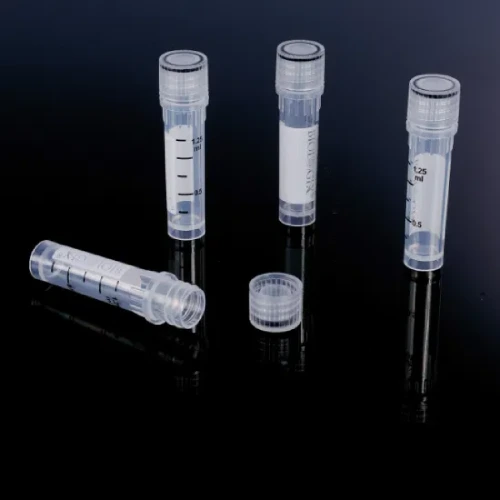
Cryogenic Treatment Essential Tool: Cryovials
Sample Storage: Cryovials are used to store small amounts of materials such as metal specimens or biological samples that are subjected to cryogenic treatment. These vials are designed to withstand extreme low temperatures without compromising the integrity of the samples.
Sample Preparation: Before treatment, samples may be pre-processed and placed into cryovials. This ensures that they are properly organized and protected during the cooling process.
Temperature Management: Cryovials help in maintaining the temperature stability of samples during the treatment process. They prevent thermal shock and ensure gradual cooling or warming as required.
Handling and Transfer: Cryovials facilitate the safe handling and transfer of samples between different stages of cryogenic treatment. This includes moving samples into and out of cryogenic chambers or baths.
Protection: Cryovials provide a secure enclosure that shields samples from contamination and physical damage during storage and handling in cryogenic conditions.
Identification and Tracking: Cryovials are often labeled or barcoded to allow for easy identification and tracking of samples throughout the treatment process. This ensures proper documentation and traceability of sample history.
Compatibility: Cryovials are compatible with various cryogenic storage systems and equipment, making them versatile for use in different types of cryogenic treatment setups.
Benefits of Cryogenic Treatment
Enhanced Wear Resistance:
Improves the wear resistance of metals, leading to longer lifespan and reduced maintenance.
Increased Hardness and Strength:
Enhances the hardness and tensile strength of metals by refining their grain structure and transforming retained austenite into martensite.
Reduced Residual Stress:
Alleviates residual stresses in materials, which can help prevent cracking and deformation.
Improved Dimensional Stability:
Increases the dimensional stability of materials, making them less susceptible to changes in size and shape due to thermal cycling.
Enhanced Fatigue Resistance:
Improves fatigue resistance, allowing materials to withstand repeated loading and unloading cycles without failure.
Applications of Cryogenic Treatment
Automotive Industry:
Treatment of engine components, gears, and brake rotors to enhance durability and performance.
Tool and Die Industry:
Extends the life of cutting tools, drill bits, and dies by improving their wear resistance and hardness.
Aerospace Industry:
Used for critical components that require high strength, stability, and resistance to fatigue.
Medical Industry:
Treatment of surgical instruments and implants to improve their performance and longevity.
Musical Instruments:
Applied to brass and string instruments to enhance sound quality and durability.
The Cryogenic Treatment Process
Cooling Phase:
Materials are slowly cooled to cryogenic temperatures to prevent thermal shock and ensure uniform treatment.
Soaking Phase:
The material is held at the cryogenic temperature for a specified duration, typically ranging from a few hours to 24 hours, allowing for complete transformation of the microstructure.
Warming Phase:
Materials are gradually returned to room temperature to avoid inducing stress and potential cracking.
Types of Cryogenic Treatment
Deep Cryogenic Treatment (DCT):
Involves cooling materials to temperatures below -196°C, providing maximum benefits in terms of hardness and wear resistance.
Shallow Cryogenic Treatment (SCT):
Cools materials to moderately low temperatures (typically around -80°C), offering some improvement in properties but to a lesser extent than DCT.
Considerations and Limitations
Material Suitability:
Not all materials respond well to cryogenic treatment. It is most effective on certain alloys and tool steels.
Cost and Equipment:
Requires specialized equipment and can be costly, which may limit its use in some applications.
Post Treatment Processing:
Some materials may require additional heat treatments or tempering after cryogenic treatment to achieve the desired properties.
Cryogenic treatment is a powerful technique for enhancing the properties of metals and other materials, offering significant benefits in terms of wear resistance, strength, and stability. While it involves specific processes and considerations, its application across various industries highlights its value in extending the lifespan and improving the performance of critical components. As technology advances, the efficiency and accessibility of cryogenic treatment are likely to improve, expanding its use and benefits further.
How to Store Cryogenic Liquids?
Background
Cryogenic liquids are gases that have been liquefied and are maintained at extremely low temperatures. These liquids have boiling points below -150°C (-238°F). Inert cryogenic liquids are non-toxic and do not undergo chemical reactions under normal conditions. The gases they emit are colorless, odorless, and tasteless, making leaks or exposure hard to detect. Their extremely low temperatures can cause cryogenic burns upon contact with skin and can embrittle materials, leading to structural damage. More importantly, the high expansion ratio of these liquids can create dangerously low oxygen environments, posing a significant risk of asphyxiation for individuals working in or entering such facilities.
Personal Protective Equipment (PPE)
When handling or dispensing cryogenic liquids, appropriate personal protective equipment (PPE) must be worn. For inert cryogenic liquids, safety goggles, closed-toed shoes, long-sleeved shirts, and long pants are typically required at all times. Additionally, face shields and thermal gloves should be worn when filling a dewar or transferring large amounts of cryogenic liquid. Employers must provide these PPE items and ensure they are available to anyone working with cryogens.
Storage
Cryogens must be stored in containers specifically designed for their containment. These containers should be insulated and double-walled. Store all cryogenic liquid containers upright in well-ventilated areas. Handle them with care, avoiding dropping, rolling, or tipping them on their sides. Cryogen tanks and containers should not be stored near elevators, walkways, unprotected platform edges, or in areas where they might be struck or damaged by heavy moving objects.
Transporting Cryogenic Liquids
Cryogenic liquid containers should be moved using a hand truck, cart, or other suitable transportation method. The containers must be secured during transport and kept upright at all times. If inert cryogenic liquids need to be transported by elevator, routes and procedures should be assessed to ensure safe movement of the cryogens. In the event of a power failure, a passenger could be trapped in the confined space of an elevator with a cryogenic liquid container, and evaporation of the liquids could lead to oxygen displacement.
Route evaluations should consider the quantity of material being transported, the type of vessel used, typical evaporation rates, and ventilation in all areas, including elevators. Mitigation procedures, such as sending containers alone on elevators or informing others when cryogenic liquids are being transported, may be necessary based on a hazard assessment.
Yongkang Medical is an experienced company that specializes in the manufacturing and distribution of high quality cryogenic vial. Contact us to order cryogenic storage vials! Emails: czyk001@163.com or eric@yongkangcn.com


