
 English
 हिन्दी
 Melayu
 Español
 Français
 العربية
 Deutsch
 lingua italiana
 shqiptare
 日本語
日本語 Bahasa indonesia
 Nederlands
 Portugues
 한국어
한국어 Filipino
 Pусский
For vacuum filtration, specialized glassware is required to facilitate the separation of solids from liquids under reduced pressure. Typically glass vacuum filter flaskis designed with a sidearm to connect to a vacuum source. The top part of the flask has a ground glass joint where a Buchner funnel is placed.
What are Vacuum Filter Flasks?
Vacuum filtration involves creating a pressure contrast across the filter material by removing the air beneath the filter paper. This method enhances the filtration process by exerting an additional force on the solution, supplementing the gravitational force and thereby accelerating the filtration rate.
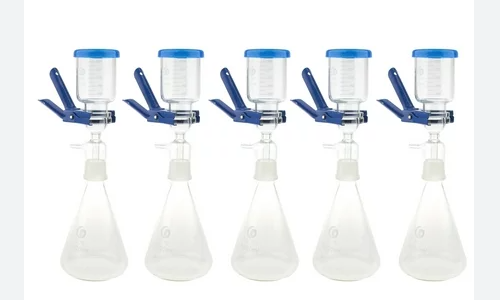
A vacuum filter flask, also known as glass filtration apparatus, is a specialized piece of laboratory glass equipment designed for vacuum filtration processes. This apparatus features an Erlenmeyer flask with a flat base, complete with volume indicators, and a sidearm. The sidearm is equipped with a connector for attaching a vacuum pump.
By applying a vacuum to the base flask, a pressure difference is established across the filter paper. This pressure variance facilitates the movement of liquid from the funnel, passing through the filter paper and eventually collecting in the base flask. This setup, when combined with a funnel and Millipore filter paper, effectively separates solid materials from liquids.
Where are They Used?
Vacuum filtration finds extensive application in scientific, chemical, and biological laboratories due to its ability to swiftly and effectively separate solid substances from liquids. This method is especially valuable when dealing with limited sample quantities, speeding up the filtration process and decreasing the risk of contamination. When coupled with a reliable vacuum system, vacuum filtration emerges as an essential instrument in laboratory operations.
What are They Used For?
Vacuum filtration serves multiple purposes, including the separation of cells or bacteria from liquid cultures, the extraction of specific compounds from mixtures, or the purification of solutions by removing unwanted impurities. The vacuum filter flask facilitates a speedy and effective filtration procedure, while the inclusion of a vacuum pump guarantees a consistent flow of liquid through the filter paper, preventing blockages.
What are the Benefits of Vacuum Filter Flasks?
Vacuum flask with filter offers several benefits that make them indispensable in laboratory settings and other applications:
Efficient Filtration: By creating a pressure differential across the filter medium, vacuum filtration unit accelerates the separation process, allowing for quicker and more efficient filtration of samples.
Consistent Results: The controlled vacuum pressure ensures a uniform flow of liquid through the filter paper, leading to consistent and reproducible results.
Minimized Contamination: Vacuum filter apparatus reduces the risk of contamination by preventing the splashing or aerosolization of samples, thereby maintaining a cleaner working environment.
Versatility: Vacuum filter flasks can be used for a wide range of applications, including separating solids from liquids, isolating compounds, purifying solutions, and more.
Time Saving: The rapid filtration rate enabled by vacuum filtration saves time, making it particularly beneficial when processing large volumes of samples or working with time sensitive experiments.
Ease of Use: Vacuum filter flasks are designed for straightforward operation, making them accessible even for those with limited experience in laboratory techniques.
Cost Effective: In the long run, the efficiency and reliability of vacuum filter flasks can lead to cost savings by reducing the need for repeated filtration or reprocessing of samples.
Customizable: Vacuum filtration setups can be tailored to specific requirements by selecting the appropriate filter paper, pore size, and other accessories, ensuring optimal performance for various applications.
In summary, vacuum filter flasks provide a combination of efficiency, consistency, and versatility, making them a valuable tool in laboratory research, chemical analysis, biological studies, and other fields where precise separation and purification of samples are essential.
Difference between gravity filtration and vacuum filtration. Two primary filtration methods prevalent in organic chemistry labs are gravity filtration, the conventional method driven solely by gravity. While easy to set up, gravity filtration can occasionally yield subpar results, especially at slower speeds. On the other hand, vacuum filtration propels substances through the Buchner funnel using a pump's generated pressure. Both techniques effectively eliminate solid impurities from an organic solution or facilitate the isolation of organic solids.
Choosing the appropriate filtration method hinges on the specific experimental context. Here are some considerations to guide your decision making:
Gravity filtration serves as a viable method for extracting solid impurities like drying agents, unwanted byproducts, or residual reactants from organic liquids. While vacuum filtration can achieve the same goal, it generally operates more swiftly than its gravity based counterpart.
When comparing gravity and vacuum filtration, speed emerges as a distinct advantage of vacuum filtration. However, certain precautions are essential when employing this method. Ensure the glass filter flask remains free from cracks on its sides or bottom. Additionally, secure both the filter flask and the vacuum trap firmly to prevent any displacement during the filtration process.
It's imperative to use robust, thick walled glassware for the filter flask, vacuum trap, and tubing. Ordinary tubing risks collapsing under vacuum conditions.
Never conduct vacuum filtration without a vacuum trap, and maintain its cleanliness diligently. A pristine trap facilitates easier recovery of any unintentionally filtered materials compared to a contaminated trap.
For collecting solids swiftly, vacuum filtration stands out due to its rapidity. Conversely, if your goal is to gather the filtrate, gravity filtration offers a reliable method.
Distinguishing between gravity and vacuum filtration, the former becomes more advantageous when filtering substantial volumes. While vacuum filtration accelerates the process, it introduces potential challenges such as increased spill risks and diminished speed if you must periodically empty the flask and readjust the setup. Opt for vacuum filtration when dealing with minimal solid quantities or fine particulates.
Vacuum filter flasks stand as pivotal instruments in numerous scientific research and experimental contexts. They streamline the filtration of samples, enhancing efficiency and precision. Prioritizing the acquisition of top tier vacuum filter flasks and ensuring their upkeep is essential for the efficacy of laboratory experiments and the purification of minuscule samples. When employed and cared for correctly, the vacuum filter flask becomes an indispensable asset in any research or laboratory environment.
Yongkang Medical is a leading medical grade glass filtration apparatus supplier, we prioritize the quality, durability of their products. The companies may also offer customization options to meet the specific needs of their customers, including different sizes, shapes, and valve configurations. Contact us to order test tube stand.


