
 English
 हिन्दी
 Melayu
 Español
 Français
 العربية
 Deutsch
 lingua italiana
 shqiptare
 日本語
日本語 Bahasa indonesia
 Nederlands
 Portugues
 한국어
한국어 Filipino
 Pусский
When it comes to quartz glass beaker, we will think about many laboratory glasswares. Glassware is ubiquitous in laboratory settings, available in various forms and dimensions. While there's a growing inclination towards substituting glass vessels with more economical and robust plastic alternatives, certain substances, experiments, or applications necessitate the use of glassware.
There are several reasons for this preference. Firstly, glass demonstrates relative inertness, ensuring minimal interference with the chemicals or substances contained within, thus preserving the integrity of experimental outcomes. Additionally, its transparency facilitates effortless monitoring, while its capacity to withstand high temperatures adds to its utility. Moreover, its malleability enables convenient customization into desired shapes and configurations.
The Types of Glassware in Laboratory
Laboratories boast a diverse array of glass apparatuses, each crafted from various glass types tailored to specific functions. Quartz glass, for instance, exhibits high temperature resistance and selective transparency across the electromagnetic spectrum. Heavy-wall glass undergoes reinforcement to endure pressurized experiments, whereas amber glass is tinted to shield against UV and infrared radiation, rendering it ideal for fluid storage.
Here's an overview of the assorted glass instruments commonly employed in laboratories:
Bulb and graduated pipettes: Designed for precise fluid transfer between containers.
Burettes: Facilitate accurate liquid dispensation into other vessels.
Beakers: Basic containers for holding samples and reagents.
Volumetric flasks: Resembling beakers, they often feature conical or spherical shapes with a tapered neck for accurate volume measurements.
Condensers: Dedicated to cooling heated liquids or gases.
Retorts: Employed in distillation processes.
Funnels: Featuring tapered necks for seamless pouring into narrow openings.
Petri dishes: Shallow receptacles for cultivating living cells.
Graduated cylinders: Cylinder-shaped vessels with volumetric markings for volume monitoring.
Vials: Small bottles for sample or reagent storage.
Slides: Utilized for holding specimens under microscopes for examination.
Stirring rods: Instruments for blending solvents and samples.
Desiccators: Containers designed to absorb moisture from substances.
Drying pistols: Offering a direct means to remove moisture from samples, akin to desiccators.
Given the breadth of glassware utilized in laboratory procedures and the critical necessity for precision, it's imperative to maintain equipment in optimal condition. Despite glass's resilience to high temperatures and most chemicals (with few exceptions), prolonged usage inevitably leads to wear and tear.
What Is A Quartz Glass Beaker?
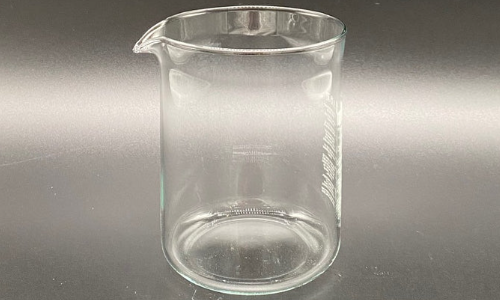
Laboratory beakers serve as containers for liquids, facilitating stirring, mixing, or heating as required for experiments. Available in diverse shapes, sizes, and materials tailored to specific applications, these lab glass beakers can either be reusable or disposable.
Beaker Types
Low Form Glass: Also known as Griffin beakers, low-form glass beakers are characterized by their height being approximately one and a half times their width. They are equipped with a spout for convenient pouring and have straight sides.
Low Form Plastic: Low-form plastic beakers, designed with handles for easy pouring, offer a similar profile to their glass counterparts. Their wide, flat bottoms make them suitable for heating on a hot plate.
Tall Form: Tall form beakers, also referred to as Berzelius beakers, boast a height twice that of their width. Featuring slightly tapered sides, a spout for pouring, and optionally a handle, these beakers are favored for titration procedures.
Beaker Materials
Glass: Glass science beakers crafted from borosilicate glass, renowned for its inclusion of boron trioxide, exhibit exceptional resistance to abrupt temperature fluctuations. This glass variant demonstrates excellent chemical resilience and can endure temperatures reaching up to 400°C. Glass beakers adhere to ASTM E960 standard specifications, categorizing them into five distinct types.
Quartz glass: A quartz glass beaker is a laboratory vessel similar to traditional glass beakers but made from quartz glass instead of borosilicate glass. Quartz glass, also known as fused silica, is a high-purity form of glass characterized by its exceptional thermal stability, resistance to thermal shock, and transparency across a wide range of wavelengths, including ultraviolet and infrared. Quartz beakers are typically used in applications where extreme temperature resistance and optical clarity are paramount, such as in certain scientific experiments, chemical reactions, and semiconductor manufacturing processes. They offer advantages such as resistance to chemical corrosion, minimal thermal expansion, and the ability to withstand high temperatures without deformation or leaching of contaminants, making them suitable for specialized laboratory procedures.
Plastic: It is imperative to meticulously select the appropriate plastic beaker contingent upon the chemical composition and thermal demands of the experiment.
Metal: Beakers fabricated from stainless steel or aluminum offer alternatives to traditional glass or plastic options. Opaque in nature, these metal vessels are characterized by their lightweight construction and resistance to shattering or chipping. Aluminum beakers exhibit a tolerance for temperatures up to 340°C, whereas stainless steel counterparts boast a higher threshold of safety, enduring temperatures up to 550°C.
How to Clean Beakers
Irrespective of the material—plastic, glass, or metal—it is imperative to clean beakers thoroughly to eliminate any potential contamination that could compromise laboratory results. Promptly washing the beakers after use, either in hot water or utilizing a labware washer, is essential to prevent the accumulation of residues.
Why Are Science Beakers Often Made of Quartz Glass?
Science beakers are not typically made of quartz glass. Instead, they are commonly made of borosilicate glass, which is a type of glass known for its resistance to thermal shock and chemical reactions. Borosilicate glass can withstand high temperatures and sudden changes in temperature, making it ideal for use in laboratory settings where experiments often involve heating or cooling substances rapidly.
Quartz glass, on the other hand, is used for specialized applications where extreme temperature resistance and optical clarity are required. It is transparent across a broad spectrum, including ultraviolet and infrared wavelengths, making it suitable for certain scientific instruments, optical components, and applications in industries such as semiconductor manufacturing and spectroscopy.
While quartz glass possesses excellent thermal and optical properties, it is more expensive and less commonly used for everyday laboratory equipment like beakers due to its higher cost and specific requirements. Borosilicate glass, with its balance of durability, thermal resistance, and affordability, remains the preferred choice for most laboratory glassware, including beakers.
Yongkang Medical is a company that specializes in the manufacturing and distribution of high quality laboratory glassware, such as quartz beakers. Contact us for more information!


