
 English
 हिन्दी
 Melayu
 Español
 Français
 العربية
 Deutsch
 lingua italiana
 shqiptare
 日本語
日本語 Bahasa indonesia
 Nederlands
 Portugues
 한국어
한국어 Filipino
 Pусский
Guidewires, solid wires maneuvered within the vascular system or extra vascular tract, serve as a guiding point for catheters. They enable operators to navigate along a specified vessel or track.
Explanation
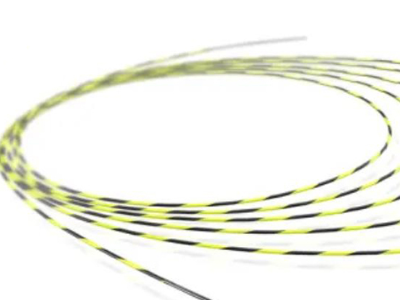
Ribbed sheathed nitinol hydrophilic wire designed to provide excellent visual use.
Zebra guidewire is used to gain access to the desired anatomical location and assist in the insertion of medical devices during diagnostic or interventional procedures.
Knowledge
Urological Guidewires serve as a foundation for diagnostic and therapeutic catheters. Available in diverse specifications, including size (diameter and length), tip designs, coating, and hardness, these guidewires cater to various needs. Zebra guidewires, for instance, feature a radiopaque distal spring tip enclosed within a flexible outer sleeve, designed with tapering to enhance visibility within the scope. Meanwhile, PTFE guidewires are well suited for standard urological procedures, with the PTFE coating aiding in device traceability and facilitating its advancement within the urinary system.
Functions
The guidewire functions as the tool employed to navigate the catheter into position during Central Venous Catheter (CVC) insertions. Its primary objective is to achieve access to blood vessels through a minimally invasive approach. Integral to the Seldinger Technique, the guidewire comprises a plastic housing, a straightener sleeve facilitating the wire's insertion into the needle hub, and a curved J wire at the tip. The curved J wire serves to prevent vessel perforation by allowing the wire to "bounce" off vessel walls.
A stylet differs from a guidewire; it is a singular straight wire with a hub at one end, inserted into the catheter before placement. The purpose of the stylet is to impart rigidity to the catheter during insertion. Once the catheter is in place, the stylet is withdrawn from the catheter.
What Are Guide Wires Made Of?
Crafted from a rigid stainless steel wire typically composed of 316L or aged 630, this guidewire also incorporates a shape memory alloy such as Nitinol or CoCrMo, known for its high yield strength. The guidewire comes in standard diameters ranging from 0.6 to 3.2 mm, tailored to the size of the implants. Equipped with a sharp or threaded point, it can penetrate the bone with minimal trauma.
There are Three Types of Guidewires:
Solid Core Wire: The central wire is encased by a metal 'spring' coil.
Mandrel Wire: The outer spring coil is at one end
Ribbon Wire: The spring coil encases both the core wire and a ribbon wire
There are Three Types of Spring Wire Guide Tips:
Straight tip, with straight, flexible tips at both ends reducing the risk of trauma to the blood vessel (not shown)
J tip, with a straight, flexible tip at the proximal end bent tip at the distal end, providing even more flexibility and protection for the vessel during insertion.
Angled tip, with a straight, flexible tip at the proximal end and a bend of less than 90 degrees on the distal end, helping the guidewire steer during placement.
Spring wire guides also vary in materials, diameter, length, coatings and position indicators (marked or unmarked).
The Guidewire Assembly Consists of:
The advancer, which straightens the J tip to help introduce the wire into a syringe or needle.
Tips for Successful Placement when Working with Guidewires
Respect the angle of the wire. The guidewire sits at a particular angle. When the dilator is placed over the wire, do not change the angle of the wire. This may lead to kinking.
Maintain a slight back traction on the wire. This helps the dilator and/or catheter slide over the wire properly.
Monitor for kinks. If the wire is not advancing smoothly or a dilator is not inserting properly, a kink is the likely cause. Try pulling the wire back so the dilator can slide over the kink.
Advance the guidewire slowly in short strokes, 1 2 centimeter increments.
Do not wrap the wire over fingers or wrist. This can straighten the J wire and cause the wire to separate.
What Size Is A Guide Wire?
Guide wires are available in a range of sizes, spanning from 0.014 to 0.038 inches in diameter and 50 to 260 cm in length. These wires are constructed with wire cores featuring varying levels of tensile strength and outer coatings with diverse hydrophilic and lubricious characteristics. The distal 1 to 5 cm segment of the wire often possesses a unique design and maneuverability, playing a crucial role in determining the wire's functionality (see Fig. 10.5). Various labels, such as super floppy, ordinary, super stiff, hydrophilic, and glide (e.g., Terumo, Sommerset, New Jersey), are used to describe wires based on their characteristics.
Wires with a spring coil design and hydrophilic coating on the distal end are particularly valuable for navigating tortuous vessels while providing ample support for catheter exchange. Examples include the Wholey wire (Coviden, Plymouth, Minnesota) and Magic Torque wire (Boston Scientific, Natick, Massachusetts).
In specific cases, such as stabilizing balloons across high flow lesions or during stent implantation and valvuloplasty, the Amplatz super stiff and ultra stiff guide wires (Cook Medical, Bloomington, Indiana) ranging from 0.025 to 0.038 inches are widely utilized. Specialized wires like the Meier Backup wire (Boston Scientific) and Lunderquist extra stiff wire (Cook Medical) have proven invaluable for transcatheter pulmonary and aortic valve implantation, particularly in the presence of tortuosity and calcification challenges. Additionally, having different 0.014 coronary wires on hand is crucial for engaging coronary fistulas and small, tortuous arterovenous malformations.
How Do I Choose A Guidewire?
Selecting a guidewire involves considering various technical features and key factors. When choosing a guidewire, it's essential to pay attention to the following key features: (1) whether it has a tapered tip or not; (2) the presence of a polymer cover; (3) the level of stiffness; and (4) the trackability of the guidewire. During intricate procedures, it is common to switch from one set of wires to another, often facilitated through a microcatheter.
Yongkang Medical is a company that specializes in the manufacturing and distribution of high quality zebra wire urology for medical applications. Our products are designed to meet the needs of healthcare providers and patients who require reliable and comfortable oxygen therapy. Contact us to order and we will give you a competitive zebra guide wire price.


