
 English
 हिन्दी
 Melayu
 Español
 Français
 العربية
 Deutsch
 lingua italiana
 shqiptare
 日本語
日本語 Bahasa indonesia
 Nederlands
 Portugues
 한국어
한국어 Filipino
 Pусский
Saliva collection is generally considered a non invasive procedure. It involves gathering saliva from the mouth, typically using a swab, tube, or other collection device, without the need for needles, incisions, or any physical intrusion into the body. This method is commonly used in various medical, research, and forensic applications because it is relatively easy to perform, minimizes discomfort, and carries a lower risk compared to more invasive techniques.
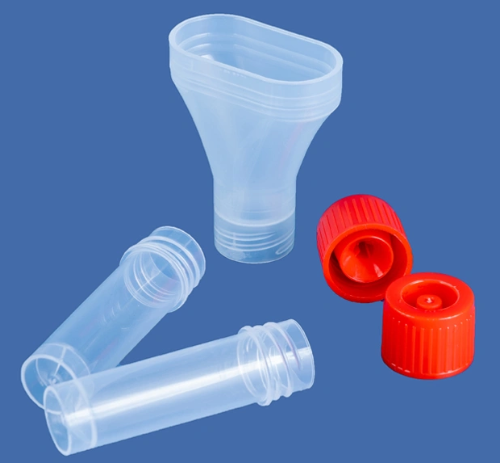
How to Collect a Saliva Sample for a Cortisol Test
Before You Collect a Sample
Avoid using any steroid inhalers for 24 hours prior to sample collection.
Refrain from applying creams or lotions containing steroids, such as hydrocortisone.
Do not collect a sample if your gums or the inside of your mouth are bleeding. Consult your healthcare provider if you frequently experience these issues.
The collection device should not be used by children under 3 years old. Children under 10 should be assisted by an adult.
Do not brush or floss your teeth before collecting the sample.
Refrain from eating or drinking for 30 minutes before the sample collection.
Only use the saliva collection device.
Avoid touching the swab with your fingers.
Your healthcare provider will instruct you on the appropriate time for sample collection. Please follow their guidance.
Collect the sample at ________ a.m. / p.m.
How to Collect a Sample
Wash your hands thoroughly with soap and warm water, then dry them with a clean towel.
Remove the top cap of the tube to reveal the swab inside.
Tilt the tube so that the swab falls directly into your mouth.
Avoid touching the swab with your fingers.
Keep the swab in your mouth for 2 minutes, rolling it around. If rolling is difficult, keep it under your tongue.
Do not chew the swab.
Return the swab to the container without touching it.
Replace the cap on the tube, ensuring it is sealed tightly.
Label the tube with your name, date of birth, and the time of collection.
Return the sample to your clinic the following day.
Materials and Methods
1. Search Strategy
This scoping review followed the methodological framework established by Arksey and O’Malley and was reported in accordance with the Preferred Reporting Items for Systematic Reviews and Meta Analyses Extension for Scoping Reviews (PRISMA-ScR) checklist. A comprehensive search was conducted across bibliographic databases, including the National Library of Medicine (PubMed-MEDLINE), Embase, and Web of Science. The search strategy incorporated a range of terms, including general controlled vocabulary (Medical Subject Headings (MeSH) in PubMed and Emtree in Embase), synonyms, related terms, and free text keywords. The terms used were: ‘saliva’, ‘specimen handling’, and ‘child’ or ‘adolescent’. The search was tailored to fit each database's specific requirements. No publication date restrictions were applied. Additional relevant studies were identified by reviewing the reference lists of selected articles.
2. Inclusion and Exclusion Criteria
Inclusion Criteria:
Studies detailing the saliva collection or sampling process, including the collection method or sampling device used.
Studies involving patients aged 0 to 18 years.
Studies involving patients in good overall health or with mild systemic conditions that did not significantly impact their functional abilities, or studies with a healthy control group.
Study designs including cohort studies, cross-sectional studies, case–control studies, and randomized or quasi-randomized clinical trials.
Articles published in English.
Exclusion Criteria:
Articles where the full text was not available or could not be retrieved.
Literature reviews, editorials, case reports, conference papers, and systematic reviews.
Studies lacking original data.
Studies including participants with orthodontic appliances or splints.
Studies that did not separately report data for adults and children or adolescents.
Studies involving patients using drugs, medicines, or mouthwashes, except where saliva was collected at baseline before starting any treatment (in such cases, only baseline data was considered).
Studies involving artificial saliva.
Studies involving participants with chronic diseases or conditions affecting salivary function, such as Sjögren’s disease or rheumatoid arthritis, or those without a healthy control group.
3. Screening Process and Data Selection
The study selection process is outlined. Studies identified through the search strategy were imported into EndNote 20 and RAYYAN, an online application for screening literature reviews. Duplicates were removed electronically using EndNote. Titles and abstracts of potentially relevant studies were evaluated independently by two reviewers (JMHF and DH). Prior to screening, the two reviewers underwent calibration by independently reviewing 50 randomly selected articles (kappa = 0.95). Studies meeting the inclusion criteria were selected for full-text review, conducted by one reviewer (JMHF). The full-text articles were assessed for eligibility, with the second reviewer (DH) verifying the comprehensiveness and accuracy of the selection. Any inconsistencies or uncertainties were resolved through discussion and consensus between the two reviewers, with a third reviewer (FB) consulted if an agreement could not be reached. Additionally, the reference lists of selected articles were examined for potentially relevant studies not identified in the initial search. Publications meeting all selection criteria were included for data extraction.
4. Data Extraction and Summary
Data extraction from the included studies was carried out by one reviewer (JMHF). Key information collected included: author, publication year, country of origin, study design, sample size, participant age range, study objectives, saliva collection methods, any remarks on sampling (if applicable), type of saliva collected, and the main study outcomes. This data was recorded in an Excel spreadsheet.
The primary focus was to evaluate the various methods of saliva collection, while the secondary focus was to identify which methods were most suitable for children or adolescents. A method was deemed suitable if (1) it allowed for the collection of the correct type and quantity of saliva, (2) it was comfortable for the patient and appropriate for their age or level of understanding, and (3) it had good treatability for the child.
All relevant data was initially collected by JMHF and then verified for completeness and accuracy by a second reviewer (DH). The extracted data were summarized using a narrative synthesis.
Yongkang Medical is a leading manufacturer and supplier of high quality dna collection kit saliva for laboratory, industrial, and food preparation applications. We specialize in designing and producing innovative products,such as saliva collection kit for dna that meet the needs of our customers and exceed their expectations. Emails: czyk001@163.com or eric@yongkangcn.com


